"Resident Evil: The Umbrella Chronicles" First and Last Letter Word Quest Challenge
A high-stakes Word Quest that challenges fans to recall iconic figures using only first and last letter clues.
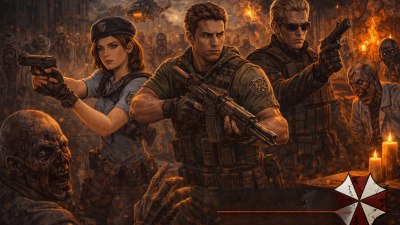
This image was created with the assistance of DALL·E
Action-horror storytelling thrives on recognition under pressure, and few franchises test memory quite like this one. This Word Quest transforms that tension into a letter-based puzzle, asking players to identify familiar figures using only the first and last letters of their names. It’s a compact challenge designed to reward attention, experience, and instinct.
Rather than revisiting plot details or cinematic moments, the puzzle strips everything down to recall alone. With minimal information to work from, solvers must rely on how deeply these figures are embedded in their memory. The result is a challenge that feels both demanding and satisfying, echoing the urgency that defines the source material.
Why Recognition Matters in Action Horror
In fast-paced horror narratives, characters often appear across multiple scenarios and timelines. Their identities become anchors, helping players navigate shifting perspectives and escalating threats. Remembering who is involved can be just as important as remembering where you are or what you’re facing.
🧠🧠🧠
Love quick brain games? Find more Word Quests below:
🔤 "Resident Evil Outbreak" Word Quest: Guess the Character Using Initial Clues
🔤 "Resident Evil Outbreak File #2" Word Quest: Can You Survive This Puzzle Game?
🔤 "Resident Evil Survivor" Word Quest: Can You Name Them With Only Two Letters?
🧠🧠🧠
This type of recognition is rarely visual alone. Voices, attitudes, and moral alignment all contribute to how figures are remembered. A name can instantly summon a role within the story’s larger conflict, making recall an emotional and strategic process.
The Strength of First-and-Last-Letter Clues
First-and-last-letter challenges are effective because they provide structure without certainty. The brain is guided, but not led. Solvers must test patterns, sounds, and familiarity, narrowing possibilities until something clicks.
This mirrors gameplay logic. Players often operate with incomplete information, piecing together context from fragments. The puzzle captures that same sensation, turning memory into an active tool rather than a passive reference.
Memory Built Through Repetition
Repeated exposure across missions and scenarios strengthens recall. Over time, names become inseparable from actions, choices, and consequences. Even years later, minimal cues can unlock detailed memories because those associations were formed under tension.
This Word Quest takes advantage of that durability. It doesn’t test trivia knowledge; it tests recognition forged through experience. That distinction makes success feel earned rather than accidental.
How to Play the Challenge
Decide on a clear rule for how the letters function before you begin. Some players prefer exact matching, while others allow flexibility as long as the pattern is consistent. Set a timer or limit guesses to increase intensity, or play casually and let associations surface naturally.
Group play can add another layer of fun. Discussing guesses often reveals how differently people remember the same material, highlighting which moments or roles left the strongest impressions.
A Compact Test of Survival Memory
This Word Quest is designed to be quick but meaningful. Each correct answer reflects not just recall, but a connection to moments of tension, strategy, and storytelling. It’s a reminder that survival horror lives on in memory as much as it does on screen.
With only two letters as a guide, familiar figures re-emerge, proving that when a story leaves a mark, even the smallest clue is enough to bring it rushing back.