The Psychology Behind Ghost Stories: Why We Fear What We Can’t See
Why do ghost stories scare us so much? Discover the surprising psychology behind why we fear the unseen — and why our brains love a spooky mystery 👻🧠

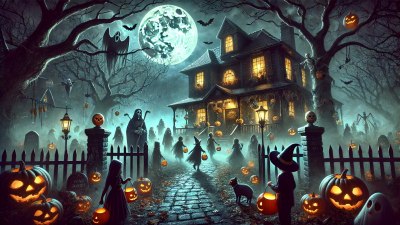
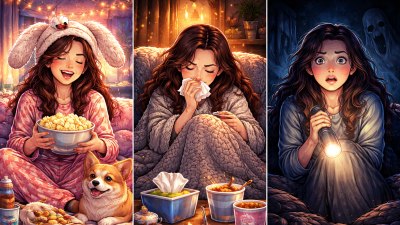
This image was created with the assistance of DALL·E
From haunted houses to creepy campfire tales, ghost stories have been part of human culture for centuries. Almost every society has them — eerie stories of spirits, unexplained sounds, and things that go bump in the night.
But why do ghost stories affect us so deeply? Why do we feel that chill down our spine even when we know the story isn’t real?
The answer lies in psychology, and how our brains are wired to respond to fear, uncertainty, and the unknown. Here’s a look at why ghost stories are so powerful — and why we keep telling them.
Our Brains Are Built to Detect Threats
Fear has always been one of our most useful survival tools. Our ancient ancestors had to be alert for predators, sudden movements, and unfamiliar sounds. The brain evolved to pay attention to anything mysterious or potentially threatening, just in case.
That same instinct kicks in when:
- We hear a creaking floorboard
- We feel a cold breeze in a dark hallway
- We see something move out of the corner of our eye
Even if we rationally know there’s no danger, our brains still fire up the fight-or-flight response. And ghost stories tap right into that system.
Uncertainty Triggers Anxiety
One of the biggest triggers of fear is not knowing.
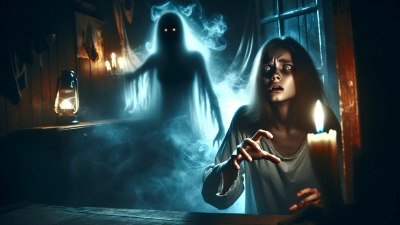
Ghost stories usually leave a lot of things unexplained — what caused the noise? Why is the mirror foggy? Who keeps whispering your name? That lack of clarity amplifies our anxiety.
Psychologists call this the intolerance of uncertainty — and it plays a huge role in why ghost stories get under our skin. We’d rather face a known danger than an unseen one.
When the threat is invisible or unknowable, our imagination fills in the blanks — and usually makes it way worse.
Darkness Changes the Game
Fear of the dark is incredibly common, especially in childhood. But even as adults, we’re still hardwired to be more alert and uneasy in low light.
That’s because darkness removes key information — we can’t see what’s coming, and our brains don’t like that. Ghost stories often take place at night or in shadowy places for a reason.
In the dark, your mind becomes more suggestible. You’re more likely to hear things that aren’t there, feel watched, or imagine movement. It’s not weakness — it’s just evolution doing its job.
The Power of Suggestion Is Real
Ever notice how you feel jumpier after watching a scary movie? That’s not just nerves — it’s your brain being primed to expect something creepy.
This is called suggestibility, and it explains why:
- People report more ghost sightings in known “haunted” locations
- Listeners feel cold spots or unease while hearing ghost stories
- A simple sound or shadow feels way scarier when you’re already on edge
Our brains are incredibly powerful at turning expectations into experiences. If you're told a room is haunted, you might genuinely start to feel uncomfortable — even if there’s nothing unusual going on.
Ghost Stories Are a Safe Way to Feel Fear
There’s a reason people enjoy scary movies, haunted houses, and spooky stories — it gives us a controlled environment to feel fear without actual danger.
In psychology, this is called benign masochism — when we enjoy “negative” experiences in a safe setting, like spicy food or roller coasters. Ghost stories give us that little adrenaline hit, followed by the relief of knowing we’re still okay.
That emotional rollercoaster can even be good for us — fear followed by laughter or comfort can bond people together, especially in group settings.
Cultural Roots Run Deep
Ghost stories aren’t just individual experiences — they’re cultural. Different societies have different beliefs about spirits, ancestors, and the afterlife.
These stories:
- Help us process grief and death
- Reinforce community values or taboos
- Give us a sense of connection to those who’ve come before
In some cases, ghost stories aren’t meant to scare — they’re a way to remember, respect, or warn. But even then, the psychological effects still apply. We fear what we don’t fully understand — and the afterlife fits that perfectly.
Final Thoughts: Ghosts Are Mirrors of the Mind
Whether you believe in ghosts or not, the fear they evoke is very real. Ghost stories tap into our deepest psychological instincts — our need for safety, our discomfort with uncertainty, and our imagination’s ability to run wild.
So the next time you feel a chill while reading a spooky tale, just remember — it’s not just the story. It’s your brain doing what it was built to do: protect you from the things you can’t see.
And maybe… just maybe… there’s a reason we’re still afraid of the dark.
What Do You Think?
Do you love a good ghost story, or do they totally freak you out? What’s the scariest experience you’ve ever had in the dark? Share your story in the comments — and pass this along to someone who’s not afraid of the unexplained.