What If Earth Had Two Moons — The Stunning Effects on Life
What if Earth had two moons? Explore how double moons could change tides, eclipses, animal life, and even the planet’s stability in fascinating and wild ways🌕🌕
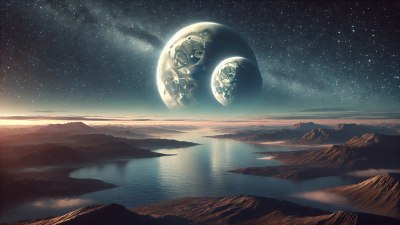
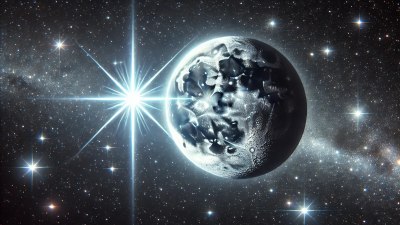
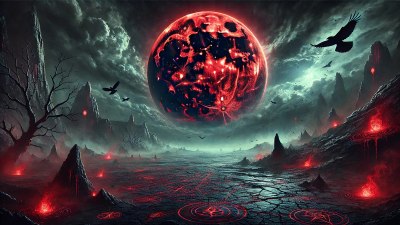
This image was created with the assistance of DALL·E
The Moon is more than just a pretty nightlight in the sky — it shapes our tides, stabilizes Earth’s tilt, and even plays a role in the rhythms of life. But what if we had two moons instead of one? Would life as we know it look the same? Would there be double the moonlight, or double the trouble?
It might sound like the setup for a sci-fi novel, but the idea of Earth having a second moon has actually been explored by scientists, astronomers, and curious minds alike. And the potential effects? They range from beautiful to downright chaotic.
Let’s imagine what would happen if Earth really did have two moons — and how it could change everything from tides to time itself.
The Tides Would Get Wild
Our current Moon is responsible for most of Earth’s tides. Its gravitational pull tugs on our oceans, creating the rise and fall of sea levels that happen twice a day.
Now imagine adding a second moon. Depending on its size and orbit, the gravitational pull from two moons would either:
- Intensify the tides, causing massive high and low tides
- Create competing tidal forces, where waves from each moon clash and form unpredictable patterns
- Possibly trigger more frequent and powerful coastal flooding
In short, the tides wouldn’t just be bigger — they’d be more complex and potentially more dangerous, especially during full moons when both moons align.
Nights Would Be Brighter (But Not Always)
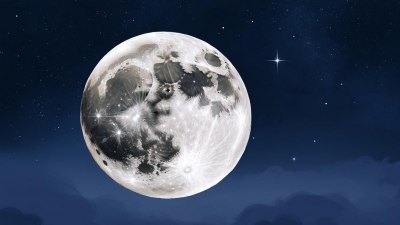
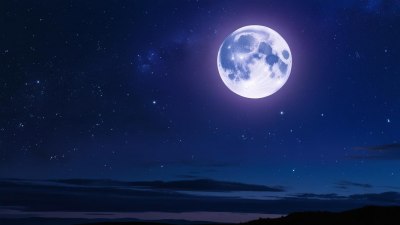
A second moon would definitely add some extra sparkle to the night sky — especially if both moons were visible at the same time. Depending on their positions and sizes, we might have:
- Brighter, longer moonlight during the night
- Unusual light patterns, with shifting shadows and double “moonrises”
- Nights where one moon sets just as the other rises
But there could also be nights where the moons cancel each other out, depending on how their light reflects and interacts. Stargazing would get a bit trickier — but moon lovers would be in for a treat.
Eclipse Season Would Be Off the Charts
With just one moon, we already get spectacular solar and lunar eclipses. Add a second moon, and the eclipse calendar would explode.
- More frequent eclipses would occur as each moon lines up with the Sun and Earth at different times.
- You could even get double eclipses, where one moon casts a shadow and the other follows shortly after.
- Or imagine one moon eclipsing the other from our view — a true lunar showdown.
Of course, predicting these events would be way more complicated, but the sky shows would be unforgettable.
Earth’s Rotation Could Get Wobbly
One of the Moon’s most important jobs is stabilizing Earth’s axial tilt. Without it, our planet could wobble wildly over time, leading to extreme climate changes.
So what happens when you add a second moon?
- If the second moon is too massive or too close, its gravitational pull could destabilize Earth's tilt.
- This could cause more dramatic seasons, long ice ages, or even hotter summers.
- On the flip side, if the moons worked together in harmony, Earth might become even more stable than it is now.
It would all depend on their masses, orbits, and how well they “played nice” with each other.
Wildlife Would Have to Adapt
Many animals use the Moon as a natural clock. From sea turtles laying eggs to birds migrating and insects mating, the lunar cycle plays a huge role in the natural world.
Two moons could seriously mix up that rhythm. We might see:
- Confused migration and reproduction cycles
- New species adapting to follow the second moon’s pattern
- Entire ecosystems shifting based on dual lunar calendars
Nature’s built-in timing would get a major upgrade — or a complete remix.
Human Culture Would Look Very Different
Let’s not forget that the Moon has shaped human mythology, art, calendars, and science for centuries. Imagine if we had grown up with two glowing companions in the sky.
- We might have developed two lunar calendars, or cultural traditions tied to each moon’s cycle.
- Ancient myths would likely include tales of moon siblings, rival lunar gods, or celestial twins.
- Poets, painters, and astronomers would have double the inspiration — and double the questions.
And if one moon looked noticeably different from the other — say, one was smaller or had a reddish hue — it might have been seen as a “bad omen” or symbol of mystery.
Could a Second Moon Actually Exist?
Interestingly, Earth has had temporary second moons before — small asteroids that get caught in our gravity for a short time before drifting away again. These mini-moons don’t stick around long, and they’re usually tiny.
As for a permanent second moon? It’s unlikely one could orbit in the same space as our current Moon without eventually causing chaos. Over time, gravitational tug-of-wars would either push one moon away or pull it crashing into Earth.
Still, in the early days of the solar system, Earth may have had a second moon. Some theories suggest a smaller moon once orbited alongside the current one — and later crashed into it, helping shape the Moon’s surface as we see it today.
Two Moons, One Wild Planet
So, what if Earth had two moons? Life would definitely be different — more tides, more light, more eclipses, and possibly a wobblier planet. Some changes would be beautiful, others bizarre, and a few downright dangerous.
But one thing’s for sure: the skies would be a lot more interesting, and our connection to the cosmos would feel even more magical.
What Do You Think?
Would you want to live on an Earth with two moons? Do you think it would be peaceful and poetic — or a tidal nightmare? Share your thoughts in the comments, and if this article sparked your imagination, pass it along to a fellow space dreamer.