Hidden Mysteries of Earth’s Deepest Oceans Scientists Still Can’t Explain
Earth’s deepest oceans hide bizarre creatures, strange sounds, glowing mysteries, and unexplored trenches. Discover the secrets scientists still can’t explain 🌊🦑
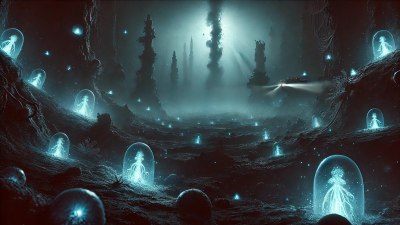
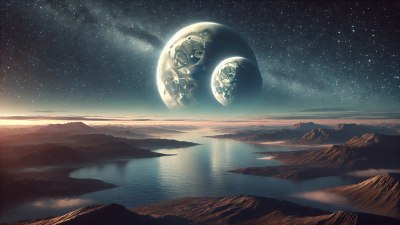
This image was created with the assistance of DALL·E
We’ve sent humans to the Moon, robots to Mars, and telescopes to the edge of the universe — and yet, the deepest parts of Earth’s own oceans remain some of the least explored places on the planet.
Beneath miles of crushing pressure and complete darkness, the deep sea is a realm of alien landscapes, unclassifiable creatures, and strange sounds that still leave scientists scratching their heads. In fact, we know more about the surface of Mars than we do about the ocean floor.
Here are some of the most mind-bending, eerie, and still-unsolved mysteries lurking in the depths of Earth’s oceans — a reminder that some of our greatest unknowns are right here at home.
The Bloop — A Mysterious Sound From the Deep
In 1997, researchers recorded a bizarre, ultra-low frequency sound in the South Pacific Ocean. It was loud enough to be picked up by underwater microphones thousands of miles apart.
They named it “The Bloop.”
For years, theories ran wild. Could it have come from a massive sea creature? A secret submarine? An undersea earthquake? Eventually, NOAA suggested it may have come from the cracking of icebergs — but many oceanographers still aren’t totally convinced.
Whatever caused it, the sheer volume of the Bloop means something huge made that sound — and its true origin remains uncertain.
Deep-Sea Gigantism — Why Are Creatures So Big Down There?
From giant squid to colossal isopods, creatures in the deep ocean seem to come in XXL sizes.
Scientists call this phenomenon deep-sea gigantism, but they still don’t fully understand what causes it.
Some think it's due to colder temperatures, lower metabolism, or the need to store more energy in an environment where food is scarce. But no single theory fits all species.
So we’re left with this question: why do things get so weirdly big the deeper you go?
Bioluminescence — Nature’s Night Lights
Many deep-sea creatures glow in the dark, using a process called bioluminescence. It’s used for hunting, mating, camouflage, and even confusing predators.
But here’s the kicker: scientists still don’t understand how or why so many different species developed this ability, especially since they’re often unrelated.
Even stranger, some creatures emit light without eyes, and others glow in ways that suggest communication we haven’t decoded yet.
It’s like the deep ocean is full of morse-code messages from alien life forms, and we’re only beginning to translate them.
Deep Ocean Currents We Still Can’t Track
The ocean is constantly moving, not just on the surface but deep below — in vast, slow-moving currents that circulate heat, carbon, and nutrients around the planet.
These deep currents are crucial to climate systems, yet we still don’t fully understand where they go, how fast they move, or how they’ll react to a changing climate.
Tracking them is difficult because of the depth, pressure, and lack of visibility. It’s like trying to study the wind patterns inside a cave the size of a continent — with no light and one thermometer.
Scientists know these currents exist. But mapping them? That’s still a work in progress.
Unexplored Underwater Caves and Trenches
The Mariana Trench is the deepest known part of the ocean, and even it hasn’t been fully explored. At nearly 7 miles deep, it’s a crushingly dark place where only a handful of submersibles have ventured.
But the trench is just one of many. Earth’s seafloor is riddled with hidden valleys, cave systems, and ridges that no one has seen. Some of these may harbor entire ecosystems unknown to science.
Every so often, expeditions stumble upon new hydrothermal vents, bizarre geological formations, or life forms that look like they belong on another planet. It’s the kind of exploration that feels more like science fiction than oceanography.
Creatures We Can’t Classify
Every year, marine biologists discover dozens of new ocean species, many of which are pulled from the deep with cameras, nets, or robotic arms.
Some are easy to identify — others are so strange that scientists have no idea how to classify them.
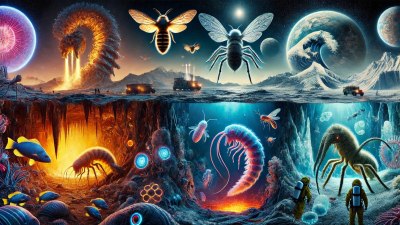
Jelly-like blobs with no clear organs. Transparent fish with glowing bones. Worms with metal teeth. Yes, really.
In some cases, scientists can’t even figure out whether the creature is a plant, animal, or something else entirely. It’s a reminder that the ocean is still one of Earth’s last frontiers of biological discovery.
The Phenomenon of Brine Pools
Imagine lakes at the bottom of the ocean — sounds impossible, right? But they exist. Called brine pools, these super-salty underwater lakes sit at the seafloor and don’t mix with the surrounding water.
Some of them are teeming with life that’s adapted to the salt-drenched environment. Others are completely sterile.
The weird part? Brine pools can have shorelines, waves, and even "rain" inside them. Scientists still don’t fully understand how they form or what their long-term impacts are.
It’s like nature decided to put a second ocean inside the ocean, and we’re only beginning to explore what’s going on inside.
The Alien World Below Our Feet
We often imagine space as the great unknown — but Earth’s deep oceans are just as alien, mysterious, and unexplored.
From unexplainable sounds to glowing creatures and entire ecosystems hidden beneath miles of pressure and darkness, the deep sea is one of the last truly wild places on Earth.
And the most exciting part? We’ve barely scratched the surface.
What Do You Think?
Which of these ocean mysteries gave you chills? Would you explore the deep sea if you could? Drop your thoughts in the comments — and if this blew your mind, share it with someone else who loves Earth’s hidden wonders.