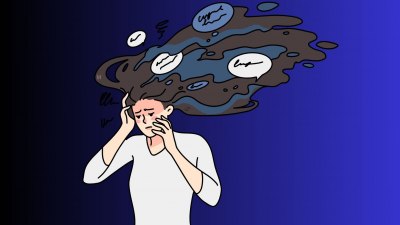
Why Your Thoughts Feel Like Someone Else Is Thinking Them
Ever feel like your thoughts don’t sound like you? Discover the psychology behind intrusive thinking, mental echoes, and finding your true voice

This image was created with the assistance of Freepik
When Your Mind Feels Like a Stranger
Ever have a thought so random, jarring, or out-of-character that you pause and wonder—did I really think that? It feels foreign, like it didn’t come from you. Like your brain borrowed someone else’s voice.
It’s unsettling. But also—shockingly common. You’re not broken. You’re just more layered than you think.
Not All Thoughts Are Yours (Kind Of)
We absorb so much from the world around us—family scripts, internet hot takes, cultural expectations, voices of authority. Over time, they layer onto your internal monologue until it’s hard to tell what’s yours and what’s just... input.
Sometimes, your thoughts are echoes. Repeats. Algorithms trained by exposure, not intention.
Intrusive Doesn’t Mean Intentional
Psychologists call them 'intrusive thoughts'—sudden, unwanted ideas that don’t align with your values. They might be violent, weird, or just deeply un-you. But they’re not dangerous unless you believe they define you.
In reality, they’re like mental spam. Not a sign of who you are—just a glitch in the system. The mind trying too hard to scan for what could go wrong.
The Voice in Your Head Isn’t Just One Voice
Your inner dialogue isn’t singular. It’s a chorus. There’s the anxious planner, the inner critic, the dreamer, the past-you, the conditioned-you, and the maybe-you-you’re-still-becoming.
Sometimes you hear a tone that doesn’t sound like you—because it isn’t. It’s a parent’s disapproval. A stranger’s judgment. A fear you inherited before you knew how to name it.
Curiosity Is Your Superpower
The key isn’t to silence the strange thoughts—it’s to notice them without panic. Ask: Who taught me to think this way? What does this voice sound like? Is this helping me or harming me?
You don’t need to control every thought. But you can learn to choose which ones deserve a seat at the table.
You Are the One Who Notices the Thought
Here’s the twist: if you can notice a thought and think, 'That doesn’t sound like me'—that means there is a 'you' behind the thought. A deeper self. A steady observer.
And that self? That’s the real you. Not every strange sentence your brain fires off. Not every anxious theory. Just the part that notices, and chooses what to carry forward.