Surprising Reasons Why We Haven’t Found Alien Life Yet
Why haven’t we found alien life yet? Explore surprising theories, from cosmic timing to stealthy civilizations, and what the silence might really mean 🛸🌌

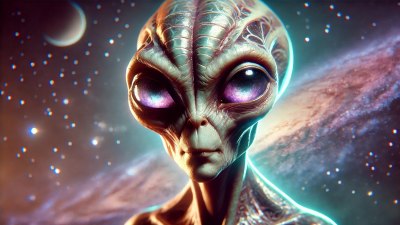
Photo via Canva.com/AI Generated Image
With billions of stars in the universe, and possibly even more planets, it feels like finding alien life should be a matter of “when,” not “if.” And yet... here we are. Still waiting. Still searching. Still wondering if we’re alone.
From UFO sightings to deep-space listening missions, humans have been on the lookout for cosmic company for decades. But despite all the efforts, we haven’t found a single alien microbe, message, or mothership. So what’s the deal?
Here are some surprising reasons why we might not have found alien life yet, and why the silence of the universe might not mean we’re truly alone.
We Might Be Looking in the Wrong Way
Most alien-hunting efforts focus on finding Earth-like planets — ones with liquid water, oxygen, and temperatures that would feel comfortable to us. But who’s to say aliens need the same conditions?
What if:
- They breathe something other than oxygen?
- They live in environments too cold or hot for us to imagine?
- Their life isn’t even based on carbon, like ours?
If alien life plays by different biological rules, we might be missing it entirely, simply because we’re only searching for life that looks like... well, us.
Space Is Way Bigger (and Quieter) Than You Think
Even though space seems full of stars and galaxies, it’s unfathomably huge. The distances between planets and solar systems are measured in light-years, which means even a nearby neighbor might take decades, centuries, or millennia to reach with current technology.
And sound doesn’t travel in space. That means:
- Signals take a long time to reach us
- Even the fastest spacecraft move incredibly slowly compared to the scale of the cosmos
- Any message from another civilization would likely be millions of years old by the time it gets here
So maybe aliens are out there — they’re just really far away, and we’re only hearing static for now.
Intelligent Life Might Be Rare — or Brief
It’s easy to assume that intelligence is the natural outcome of evolution, but what if it’s actually rare?
Maybe:
- Life is common, but most of it is microbial or primitive
- Intelligent species are the exception, not the rule
- Civilizations tend to self-destruct before they can explore space (yikes)
This idea is sometimes called The Great Filter — the theory that there’s some big hurdle in evolution that most life can’t get past. If that’s true, we might be one of the lucky few to even reach this point.
Or... the Great Filter could still be ahead of us. (No pressure.)
Aliens Might Be Actively Avoiding Us
It sounds a bit paranoid, but some scientists suggest that alien civilizations might know about us — and are choosing to stay quiet.
Why would they do that?
- Maybe they’re following a galactic version of a “Prime Directive”, letting younger civilizations evolve on their own
- Maybe they think we’re too dangerous, unpredictable, or... primitive
- Or maybe Earth is in some kind of cosmic wildlife preserve, and we’re not supposed to know we’re being watched
This is known as the zoo hypothesis, and while it sounds like a sci-fi plot, it’s been seriously discussed by real scientists.
We Might Not Recognize Alien Life Even If We Saw It
Imagine trying to explain the internet to a medieval farmer. Now imagine what it would be like if a truly alien form of life tried to communicate with us.
If alien civilizations are:
- Millions of years ahead of us
- Operating in dimensions we don’t understand
- Using forms of communication we’ve never even considered
Then it’s possible they’ve already reached out — and we simply didn’t recognize the message.
It’s like waiting for a phone call, but they sent a smoke signal instead.
Maybe We’re Actually Early to the Party
What if intelligent life is just getting started in the universe?
Stars and planets are still forming. The universe is only about 13.8 billion years old — not that old, cosmically speaking. Maybe Earth is one of the first planets to develop intelligent life, and most other civilizations are still in their microbial phase.
That would make us early explorers in a young galaxy, and the silence? It might just be temporary.
Alien Life Could Be Hidden in Plain Sight
It’s also possible that life exists much closer to home — but we haven’t found it yet.
Scientists are still exploring:
- Mars: where underground water and ancient riverbeds suggest it might have once hosted life
- Europa and Enceladus: moons with underground oceans that could harbor alien microbes
- Venus: where strange chemicals in the clouds sparked debates about microbial life
These places are right in our cosmic backyard. If we do find life there, it might be small and simple, but it would still be one of the biggest discoveries in human history.
Silence Doesn’t Mean Emptiness
The fact that we haven’t found alien life yet doesn’t mean it’s not out there. It might just mean we’re not quite ready to find it — or that we’re asking the wrong questions.
Maybe we need to expand how we define life. Maybe we’re just early. Or maybe the universe is filled with civilizations that are just as curious — and just as isolated — as we are.
For now, we listen, we search, and we wonder. And in the vast silence of space, that might be the most human thing we can do.
What Do You Think?
Why do you think we haven’t found alien life yet? Do you believe it’s out there? Or are we truly alone in the universe? Share your thoughts in the comments — and if this made your brain buzz, pass it on to your favorite space-loving friend.