Is NASA Is Betting on Giant Space Telescopes to Find Alien Worlds?
Is NASA betting on giant space telescopes to find alien life? Discover how massive new missions could finally reveal Earth-like worlds beyond our solar system 🔭🌍

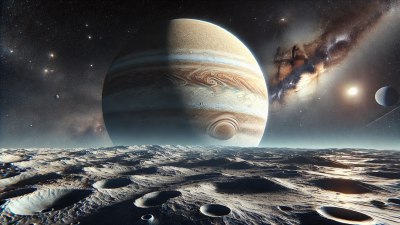
This image was created with the assistance of Freepik
For decades, humans have been asking one huge, exciting question: Are we alone in the universe? While we haven’t found aliens yet, NASA is going all-in on a new strategy to answer that question — giant space telescopes.
These aren’t your average backyard star-gazing tools. We’re talking about mega-telescopes floating in space, specially designed to search for Earth-like planets in other solar systems. So, why is NASA betting big on this approach? And could it finally lead us to our cosmic neighbors?
Let’s take a closer look.
What’s the Big Deal About Space Telescopes?
To understand why these space-based giants matter, it helps to know the difference between telescopes on Earth and telescopes in space.
On Earth, telescopes have to deal with all sorts of interference:
- Our atmosphere blurs and distorts images
- Weather can block views entirely
- Light pollution from cities makes faint objects hard to see
Space telescopes, on the other hand, avoid all of that. They float above Earth’s atmosphere, giving them a crystal-clear view of the universe. That means better images, sharper data, and the ability to see things we just can’t spot from the ground.
And now, NASA wants to use this power to go planet hunting.
Why Look for Alien Worlds at All?
Let’s face it: the idea of other planets with oceans, mountains, and possibly even life is incredibly exciting. Over the last 20 years, astronomers have discovered thousands of exoplanets — planets that orbit stars outside our solar system.
Some of them are rocky. Some of them are about the same size as Earth. Some even sit in the “habitable zone,” where temperatures could allow for liquid water.
But here’s the catch: we still know very little about these worlds. Are they actually Earth-like? Do they have atmospheres? Could they support life? That’s where big, powerful space telescopes come in.
Meet the Future of Planet Hunting: NASA’s Mega Telescopes
NASA is already planning the next generation of space telescopes, and they’re designed specifically to find alien worlds.
Here are a couple to keep an eye on:
The Nancy Grace Roman Space Telescope
Nicknamed "Roman," this telescope is expected to launch in the next few years. It will:
- Survey huge portions of the sky with incredible detail
- Spot exoplanets using microlensing, a technique that reveals planets as their stars bend light
- Help create a massive database of potential Earth-like planets
Roman is like a scout — finding lots of interesting planets we can study more closely later.
HabEx and LUVOIR — The Dream Machines
These are two powerful telescope concepts NASA is seriously considering for the future.
- HabEx (Habitable Exoplanet Observatory) is designed to directly image Earth-like planets and analyze their atmospheres for signs of life.
- LUVOIR (Large UV Optical Infrared Surveyor) is even bigger and would combine planet hunting with deep-space exploration.
Both would be able to detect biosignatures — gases like oxygen, methane, or water vapor that could hint at biological activity.
Imagine pointing one of these telescopes at a distant star and seeing a pale blue dot… with clouds, oceans, and maybe signs of life. That’s the dream.
How Do These Telescopes Spot Planets?
Spotting a planet around another star is like trying to see a firefly next to a lighthouse — from a thousand miles away. It’s tricky, to say the least.
But NASA’s new telescopes will use high-tech tricks like:
- Coronagraphs, which block out a star’s light so nearby planets become visible
- Starshades, giant flower-shaped shields that fly in front of a telescope to reduce glare
- Spectroscopy, which breaks down a planet’s light to analyze its atmosphere
Together, these tools could reveal not just the presence of a planet, but what it's made of — and even whether it could be alive.
Why Now?
The timing couldn’t be better. Thanks to discoveries from telescopes like Kepler and TESS, we now know that Earth-like planets are common. There could be billions in our galaxy alone.
We also have the technology to explore them like never before. And with missions like the James Webb Space Telescope already delivering stunning results, NASA is eager to build the next-gen tools that could finally answer that age-old question.
What Happens If We Find a Living World?
This is the million-dollar question. If one of these telescopes detects something like oxygen and methane in the same atmosphere, it could be a sign of biological activity.
Would it be proof of life? Not exactly — but it would be an enormous clue, and you can bet the world would be watching.
And even if we don’t find aliens right away, just knowing there are other Earth-like worlds out there would be one of the most profound discoveries in human history.
Final Thoughts: Betting on the Big Picture
So yes, NASA is betting on giant space telescopes, and it’s easy to see why. They offer our best chance at finding planets like ours — and maybe even life beyond Earth.
The next time you look up at the night sky, remember: somewhere out there, a world like ours might be waiting to be discovered. And thanks to these incredible new telescopes, that moment could be closer than we think.
What Do You Think?
Would you want to know if alien life was discovered? Do you think NASA’s big bet on space telescopes will pay off? Drop your thoughts in the comments — and share this article with your fellow starry-eyed explorers!