The Mysterious Forces Holding the Universe Together
Discover the mysterious forces that hold the universe together — from gravity and dark matter to unseen energy pushing galaxies apart. Space has secrets we’re still unraveling 🌌

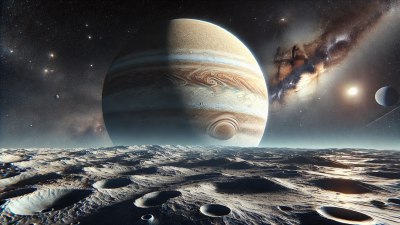
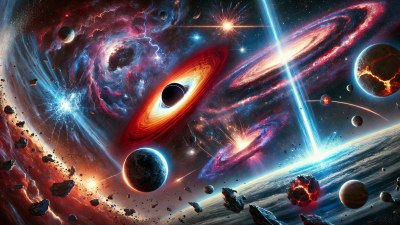
This image was created with the assistance of DALL·E
We often think of the universe as a vast, empty expanse filled with stars, galaxies, and the occasional black hole. But beneath the surface of everything we see is a delicate balance of invisible forces — ones that quite literally hold the universe together.
Without these mysterious forces, galaxies wouldn’t exist. Planets wouldn’t orbit. And we? We wouldn’t be here at all.
So what are these hidden cosmic players? And why do scientists still have so many questions about them? Let’s explore the forces that shape the cosmos, and the mysteries that continue to puzzle even the brightest minds in physics.
Gravity: The Classic Force That Binds
Gravity is probably the most familiar force — it keeps your feet on the ground and makes apples fall from trees. But on a cosmic scale, it’s the great sculptor of the universe.
Gravity is responsible for:
- Forming galaxies and galaxy clusters
- Shaping the orbits of stars and planets
- Pulling matter together to ignite stars and fuel black holes
Even though it’s technically the weakest of the four known forces, gravity never turns off and works across infinite distances. That’s why it dominates at large scales, even though we still don’t fully understand how it works at the quantum level.
It’s like the universe’s invisible glue — and yet, there’s so much more to the story.
Dark Matter: The Invisible Mass
Galaxies spin at speeds that don’t make sense if we only count the stars and gas we can see. Based on the math, there has to be something else adding mass — and gravity — behind the scenes.
Enter dark matter.
It’s:
- Completely invisible (it doesn’t emit or reflect light)
- Detectable only through its gravitational effects
- Thought to make up about 85% of the universe’s matter
Despite decades of study, no one knows exactly what dark matter is made of. It could be some kind of undiscovered particle. Or it could be something even weirder, like changes to how gravity works at large distances.
Whatever it is, dark matter is one of the biggest mysteries in modern science — and it’s holding galaxies together whether we can see it or not.
Dark Energy: The Force That’s Tearing Everything Apart
Just when scientists thought they had gravity and expansion figured out, something strange happened. Observations showed that the universe isn’t just expanding — it’s expanding faster and faster.
This unexpected acceleration is caused by dark energy, a mysterious force that seems to be:
- Spread evenly throughout space
- Pushing galaxies apart
- Making up about 70% of the total energy in the universe
It’s not like gravity. It’s not like radiation. And yet, it’s the dominant force in the cosmos right now — and no one knows what it actually is.
Some believe dark energy is a property of space itself. Others think it's something entirely new, like a dynamic energy field. Whatever the answer, it’s reshaping the fate of the universe in ways we’re still trying to understand.
The Strong Force: Holding Atoms Together
Zoom in to the tiniest scales of matter, and you’ll find another essential force: the strong nuclear force. It’s what binds protons and neutrons together inside atomic nuclei.
Without it:
- Atoms would fall apart
- Matter as we know it couldn’t exist
- The building blocks of the universe would disintegrate
The strong force is incredibly powerful, but it only works at extremely short distances — inside the heart of atoms. It’s one of the key reasons matter has structure at all.
It’s also one of the most well-understood forces — and yet it still fits into a universe filled with things we can’t see or explain.
The Electromagnetic Force: Powering Light, Magnetism, and More
Electromagnetism is another one of the four fundamental forces, and it’s the one most tied to our daily experience.
It’s responsible for:
- Electricity and magnetism
- The behavior of light
- How atoms and molecules interact
This force is what allows life to exist, technology to work, and energy to travel across the galaxy in the form of starlight.
While it’s not as mysterious as dark matter or dark energy, it’s part of the balance that allows the universe to function in an organized way, instead of spiraling into chaos.
So What’s Really Holding the Universe Together?
The answer seems to be a mix of:
- Gravity, sculpting the big picture
- Dark matter, silently adding mass
- Dark energy, expanding everything faster than expected
- Strong and electromagnetic forces, giving structure to matter itself
Together, they create the web of reality — from the tiniest particles to the largest galaxy clusters.
But here’s the twist: we still don’t know how they all work together, especially when it comes to combining gravity with quantum physics. That’s why researchers are searching for a theory of everything — a single framework that could explain all the forces in one neat package.
For now, the universe remains both beautifully functional and deeply mysterious.
Final Thoughts: A Universe Full of Hidden Hands
From the atoms in your body to the galaxies lighting up the night sky, the universe is held together by forces you can’t see — and barely understand.
Some, like gravity and electromagnetism, feel familiar. Others, like dark matter and dark energy, remain totally alien. But they all work together to shape everything we know — and everything we don’t.
The more we discover, the more we realize just how much is still hidden.
What Do You Think?
Do you think we’ll ever uncover what dark energy really is? Which of these forces fascinates you the most? Drop your thoughts in the comments and share this with someone who loves wondering about the universe.