How Quantum Physics Could Unlock New Space Technologies
Discover how quantum physics could unlock space technologies — from unbreakable communication to warp-speed computing. The future of space might be quantum! 🚀✨
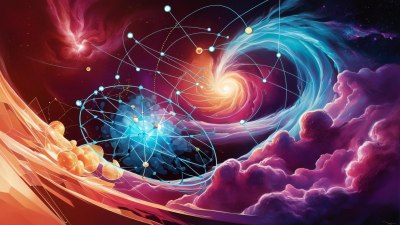
Photo via Canva.com/AI Generated Image
Quantum physics — the science of the super tiny — might sound like something that only belongs in fancy labs or superhero movies. But what if this strange branch of science could revolutionize space travel and open doors to technologies we’ve only dreamed about?
From ultra-fast communication to mind-bending sensors, quantum physics could be the secret sauce that takes space exploration to the next level. So, let’s dive into how quantum physics could make the impossible possible — and why space agencies are paying close attention.
What Is Quantum Physics (And Why Is It So Weird)?
First, let’s get one thing straight: quantum physics is weird. It deals with particles so small that they don’t behave like anything we see in everyday life.
In the quantum world:
- Particles can be in two places at once (hello, teleportation vibes).
- They can communicate instantly, even if they’re light-years apart (what Einstein called "spooky action at a distance").
- Measuring a particle can change what it’s doing — just by observing it.
These strange properties are more than just fun facts — they could actually transform space technology in ways we’re only beginning to imagine.
Quantum Communication — Unbreakable Messages Across Space
One of the coolest promises of quantum physics is quantum communication — a way to send information that’s completely unhackable.
Here’s how it works:
- Quantum particles like photons can be "entangled," meaning what happens to one instantly affects the other — no matter how far apart they are.
- If you use these entangled particles to send messages, any attempt to spy on them would instantly be detected.
Imagine astronauts on Mars communicating with Earth without worrying about anyone intercepting their messages. Or even deep-space missions talking to home base securely.
Scientists are already testing quantum satellites, like China’s Micius satellite, which has sent encrypted messages using quantum entanglement. Now imagine using this for future moon bases or Mars colonies — it could change space communication forever.
Quantum Sensors — Exploring Space With Super Senses
Another game-changing idea is using quantum sensors. These are tools that use quantum particles to make measurements way more precise than anything we have now.
In space, quantum sensors could:
- Detect gravitational waves — ripples in space-time caused by massive cosmic events like black hole collisions.
- Map tiny changes in gravity to find underground water or ice on the Moon and Mars — super useful for future explorers.
- Spot distant planets by picking up faint wobbles in starlight that regular telescopes might miss.
With these "super senses," astronauts could find resources, navigate, and study alien worlds like never before.
Quantum Computing — Solving Space Problems at Warp Speed
If you think regular computers are fast, quantum computers are on a whole other level. Instead of regular bits (which are either 0 or 1), quantum computers use qubits, which can be both 0 and 1 at the same time.
This means they could solve problems that would take normal computers millions of years — in minutes.
For space exploration, this could help with:
- Calculating spacecraft routes through complex gravitational fields.
- Modeling entire planets' atmospheres to figure out if they’re habitable.
- Designing new materials for spaceships that can survive extreme environments.
Quantum computers could even help decode alien signals if we ever receive one (yes, scientists are actually thinking about that).
Quantum Navigation — Never Get Lost in Space
GPS is great on Earth, but it doesn’t work in deep space. That’s where quantum navigation comes in.
Using quantum properties, future spacecraft could:
- Measure their motion precisely, without needing signals from Earth.
- Navigate using the tiniest changes in gravity and motion, even on long trips to Mars or beyond.
This would allow astronauts to find their way across the solar system without depending on Earth-based tracking systems — making space travel much safer and more independent.
Quantum Energy — A Wild Card for Future Power?
Some scientists are even exploring whether quantum mechanics could help create new forms of energy, like quantum batteries or even zero-point energy (a theoretical source of limitless power from the quantum vacuum).
If possible, this could give spacecraft:
- Compact, powerful energy sources for long missions.
- The ability to stay powered for years or even decades, without needing to refuel.
It’s still very theoretical — but the potential is huge for future space missions that go way beyond what we can do now.
How Far Away Are We From Quantum Space Tech?
While quantum research is booming, most of these technologies are still in early stages. But there are real experiments and prototypes already in development:
- Quantum satellites have already been launched.
- Quantum computers are being built by companies like Google and IBM, though they’re not quite ready for space yet.
- Quantum sensors are already used in labs and could soon be tested in orbit.
So while we’re not quite ready to quantum-leap across the galaxy, the future is definitely closer than you might think.
Final Thoughts: Space + Quantum = The Future
Quantum physics might seem weird and complicated, but it could be the key to unlocking a whole new era of space exploration.
With quantum tech, we could:
- Communicate securely with astronauts on Mars.
- Find hidden resources on other planets.
- Navigate through deep space like pros.
- And maybe, just maybe, find energy sources to take us to the stars.
So next time you hear about quantum physics, think beyond atoms and lab experiments — think about the future of humanity in space.
What Do You Think?
Are you excited about the idea of quantum-powered space travel? Which quantum tech do you think will change space exploration first? Drop a comment — and if this article got you thinking, share it with your fellow space fans!