The Future of Space Travel — What Your Grandchildren Might Witness
From Moon vacations to Martian cities, explore what space travel could look like in the future — and what your grandchildren might witness beyond Earth 🚀🌌

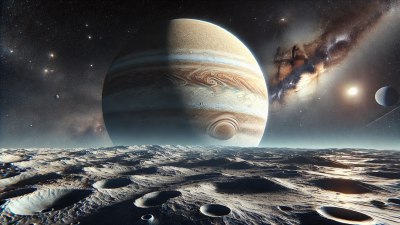
Photo via Canva.com/AI Generated Image
A hundred years ago, space travel was science fiction. Then, within a few decades, humans walked on the Moon. So what will the next hundred years bring? If space travel keeps accelerating the way it has, your grandchildren might witness a future that looks straight out of a sci-fi movie—except it could be entirely real.
From vacationing on the Moon to mining asteroids and visiting other star systems, the future of space travel is shaping up to be bold, bizarre, and absolutely thrilling. Let’s take a peek at what might be waiting for the next generation among the stars.
Regular People Traveling to Space
Right now, spaceflight is mostly reserved for astronauts and billionaires. But that’s starting to change. As private companies like SpaceX, Blue Origin, and others continue to develop reusable rockets and more affordable launch systems, space tourism could become as common as international flights.
Your grandchildren might:
- Take a suborbital trip to experience weightlessness and see Earth from space
- Book a stay in a luxury space hotel orbiting Earth
- Enjoy zero-gravity sports or entertainment in orbit
It might still be pricey at first, but as technology advances and competition grows, going to space could one day be as routine as boarding an airplane.
Moon Bases and Martian Cities
The Moon is likely to be the first place humans establish a permanent off-Earth presence. Plans are already in motion for building lunar habitats and research bases, and your grandkids might grow up seeing the Moon as more than just a glowing circle in the sky — they might know people who live there.
Next stop? Mars.
Long-term missions to Mars could begin within this century. By the time your grandchildren are adults, we might have:
- Mars cities built with local materials like ice and regolith
- Greenhouses and farms growing food in Martian soil
- Robotic helpers maintaining equipment and building new structures
- Communication delays between Earth and Mars solved with advanced tech
It won’t be easy — Mars is harsh and far — but humans are persistent. Once we arrive, it’s only a matter of time before we stay.
Space Elevators, Skyports, and New Launch Tech
Rocket launches are loud, expensive, and energy-hungry. So future generations may rely on entirely new ways to get off Earth.
A few possibilities include:
- Space elevators, massive tethers stretching from the surface of Earth into orbit, allowing cargo and people to ride up like an elevator
- Skyports with launch platforms in the stratosphere, reducing fuel costs by starting closer to space
- Magnetic launch systems that use high-speed tracks to catapult spacecraft into orbit without chemical propulsion
These futuristic systems may sound impossible, but engineers are already working on them. Your grandkids could be part of the generation that figures them out.
Faster Trips Through the Solar System
Getting to Mars currently takes months. Getting to Jupiter or Saturn takes years. But future propulsion systems could cut that travel time dramatically.
Possible breakthroughs might include:
- Ion drives, which are already being tested and use electric propulsion to travel long distances efficiently
- Nuclear-powered engines, which could speed up interplanetary missions
- Solar sails, using sunlight to push spacecraft through space like a boat catching wind
- Even antimatter or fusion drives, still theoretical but incredibly powerful
With these new technologies, space explorers of the future might travel across the solar system in weeks instead of years.
Mining Asteroids and Building in Space
Need resources? Just look up.
Asteroids contain precious metals, water ice, and other valuable materials, and mining them could become a major industry. Future space missions might tow asteroids into stable orbits or send autonomous robots to harvest resources.
Your grandchildren could witness:
- Factories in orbit, using asteroid materials to build satellites and spacecraft without launching them from Earth
- 3D-printed habitats, created on the Moon or Mars using local materials
- A thriving space economy, where off-Earth resources help build and sustain off-Earth life
In this future, Earth might become more of a home base — while the work, manufacturing, and expansion all happen in space.
Meeting Intelligent Machines... or Something Else
As AI continues to evolve, space exploration might become less about sending people and more about sending brilliant machines. These advanced AIs could explore places too dangerous or distant for humans.
Some might:
- Navigate alien terrains with ease
- Repair and build infrastructure in orbit
- Analyze data in real-time and make independent discoveries
- Even represent humanity on interstellar missions
And then there’s the ultimate question: What if we find someone — or something — out there?
Your grandchildren may live in an era where we detect alien life, receive a message from another civilization, or even build a mission to visit another star system.
The Universe Is Just Getting Started
The stars aren’t getting farther away — we’re getting closer to them. The future of space travel is full of bold possibilities, and what sounds fantastical today could be totally normal in just a few generations.
Will your grandchildren live on the Moon? Will they fly between planets or go to school with kids born on Mars? No one knows for sure — but space is calling, and the future is wide open.
What Do You Think?
Would you want your grandkids to grow up in a world where space travel is as normal as road trips? Which future possibility excites you the most? Share your thoughts in the comments — and if this article inspired some cosmic daydreaming, send it to someone who’s ready for liftoff.