How AI Could Solve Space Mysteries Faster Than Any Human
AI is changing space exploration. From finding exoplanets to decoding cosmic signals, discover how artificial intelligence is solving mysteries faster than ever 🚀🤖

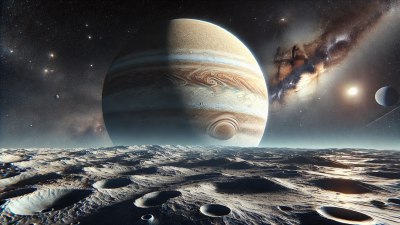
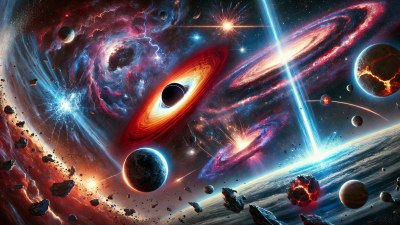
Photo via Canva.com/AI Generated Image
The universe is full of mysteries — strange signals from deep space, unexplained cosmic explosions, rogue planets drifting through the galaxy, and even questions about the origins of time itself. While astronomers and scientists have been studying these puzzles for decades, a new kind of detective is joining the mission: artificial intelligence.
AI may not wear a lab coat or stare at the stars through a telescope, but it’s proving to be one of the most powerful tools for unlocking the secrets of the cosmos. From analyzing mountains of data to spotting patterns that humans miss, AI is changing the way we explore the universe — and doing it at incredible speeds.
Here’s how AI could crack space mysteries faster than any human ever could.
Space Generates More Data Than Anyone Can Handle
One of the biggest challenges in astronomy is just how much data is out there. Telescopes, satellites, and space probes collect petabytes of information — that’s millions of gigabytes — every year. And most of it goes unexamined, simply because there aren’t enough people (or hours in the day) to go through it all.
That’s where AI steps in. With machine learning algorithms and deep neural networks, AI can:
- Scan through massive datasets in seconds
- Spot anomalies or trends invisible to the human eye
- Highlight promising leads for astronomers to investigate further
Basically, AI is like a cosmic intern — except one that never sleeps, learns fast, and remembers everything.
Discovering New Planets Just Got Easier
Finding planets outside our solar system, or exoplanets, used to be a painstaking process. Astronomers would comb through data from missions like Kepler or TESS, looking for tiny dips in starlight that could mean a planet passed in front of its star.
Now, AI models can sift through that data hundreds of times faster and with impressive accuracy. These tools can not only confirm possible planets but also find candidates that human astronomers missed.
Some AI systems are even being trained to predict which planets might be rocky, Earth-like, or potentially habitable. That means AI isn’t just helping us find more planets — it’s helping us focus on the ones that matter most.
Uncovering Signals From the Deepest Parts of the Universe
Every now and then, scientists detect something strange: a mysterious signal from space. These can be fast radio bursts, unexplained pulses of energy that last just milliseconds. Or gravitational waves, ripples in space-time caused by massive cosmic events.
These events are rare and easy to miss — unless you have an AI on the job.
AI can:
- Monitor live data streams in real time
- Spot unusual activity immediately
- Sort out what’s a real signal vs. just noise
This allows astronomers to react quickly and even capture events that only last for seconds. Without AI, many of these phenomena might go completely unnoticed.
Mapping the Universe with Machine Learning
The structure of the universe is incredibly complex. Galaxies cluster in webs, black holes hide in the dark, and clouds of gas stretch for light-years. Creating accurate maps of all this takes time, brainpower, and a lot of math.
AI can help by:
- Processing images from deep space surveys
- Classifying galaxies based on their shapes and features
- Reconstructing 3D maps of the cosmos in record time
These models can also simulate how galaxies evolve, helping scientists understand what the universe looked like billions of years ago — and what it might look like in the future.
Helping Rovers and Spacecraft Think for Themselves
AI isn’t just for astronomers on Earth. It’s also becoming essential for spacecraft exploring other worlds.
For example:
- Rovers on Mars are using AI to navigate tricky terrain without constant input from mission control
- AI systems can analyze soil or rock samples, deciding what’s worth a closer look
- Future missions to the outer planets — or even other star systems — will likely need AI to make decisions autonomously, since signals from Earth take too long to arrive
As space missions get more complex and venture farther out, AI will become the onboard brain for many robotic explorers.
Solving Mysteries Faster — and Creating New Ones
AI doesn’t just confirm what we already know. Sometimes, it spots things that no one expected — strange patterns, unexplained behavior in stars, or inconsistencies in physical laws. These surprises lead to entirely new questions and discoveries.
That’s the beauty of using AI in space exploration. It’s not just speeding up science — it’s expanding the frontier of the unknown.
We may soon see AI discovering new types of galaxies, solving long-standing questions about dark matter, or even helping us understand how the universe began. And if there’s intelligent life out there? AI might be the first to spot it.
Space Needs More Than Telescopes — It Needs Thinking Machines
As we dive deeper into the universe, the mysteries only grow. The data piles up. The questions get weirder. And the distances get longer.
AI is giving us the tools to keep up — to scan the skies faster, think deeper, and uncover things we might never notice on our own.
Whether it’s helping find a new Earth, solving the riddle of black holes, or interpreting strange signals from deep space, AI is becoming the ultimate cosmic co-pilot.
What Do You Think?
Do you think AI will be the key to discovering alien life or unraveling the origins of the universe? Would you trust a space mission run entirely by artificial intelligence? Drop your thoughts in the comments — and share this article with your fellow space explorers and sci-fi dreamers.