Christmas Conspiracy Theories That Will Blow Your Mind
Explore the wildest Christmas conspiracy theories—from Santa surveillance myths to holiday marketing secrets people still debate today
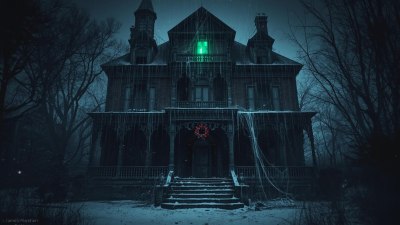
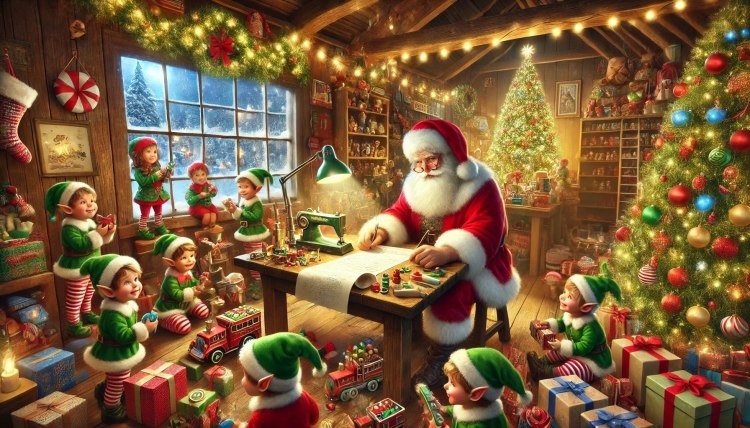
Photo via Canva.com/AI Generated Image
Christmas is filled with magic, mystery, and centuries of storytelling—so it’s no surprise that it has sparked some of the strangest conspiracy theories imaginable. Some are playful, some are eerie, and some are surprisingly persistent despite having no real evidence behind them.
From secret corporate schemes to jolly old Saint Nick’s supposed “surveillance network,” here are the most mind-bending Christmas conspiracy theories people still love to talk about.
1. Santa’s Naughty-or-Nice List Is Actually a Surveillance System
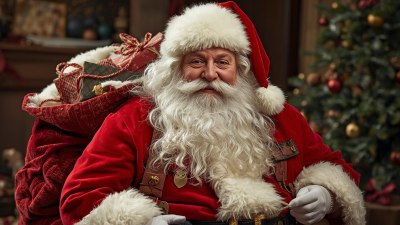
This tongue-in-cheek theory suggests that Santa’s famous list is less about holiday cheer and more about keeping tabs on children worldwide. Every time he “sees you when you’re sleeping” or “knows when you’re awake,” the theory claims it’s part of a massive, magical information-gathering operation.
Of course, it’s all in good fun—but the idea of Santa as a supernatural surveillance expert has become a meme-worthy Christmas trope.
2. The Elf on the Shelf Is a Behavioral Experiment
Some skeptics jokingly propose that the Elf on the Shelf was designed not just as a cute tradition, but as a psychological experiment to see how children respond to the idea of being constantly monitored.
The theory exploded online, especially as families noticed kids altering their behavior with the elf in the room. While the idea has no actual basis, it has fueled endless memes—and countless debates about whether the elf is adorable or unnerving.
3. Coca-Cola Secretly Created Modern Christmas Culture
This widespread theory claims that Coca-Cola shaped nearly everything about modern Christmas—from the colors to the imagery to Santa’s cheerful personality. While Coca-Cola did popularize the modern red-suited Santa in their 1930s ads, the company didn’t actually invent the character or his appearance.
Still, the idea that a soda company engineered an entire holiday aesthetic continues to circulate every year, largely because of how influential those ads truly were.
4. Reindeer Can Fly Because of “North Pole Technology”
A lighthearted conspiracy theory suggests that Santa’s reindeer don’t fly because of magic—but because they use advanced, secretive technology developed at the North Pole.
According to the fun myth, the antlers act like antennae, the sleigh uses anti-gravity propulsion, and Rudolph’s nose functions as a navigation device. While obviously fictional, it’s a favorite among fans of sci-fi holiday humor.
5. Christmas Music Is Designed to Influence Consumer Spending
This theory claims that holiday music is intentionally crafted to put people into a cheerful, nostalgic mood—making them more likely to shop. There is real psychological research showing that music can influence spending behavior, but the idea that a hidden cabal orchestrates Christmas playlist formulas is more myth than reality.
Still, the timing of Christmas music appearing earlier and earlier each year keeps this theory alive.
6. The North Pole Is a Secret Government Facility
In some fringe corners of the internet, theorists joke that the North Pole isn’t Santa’s workshop—it’s a hidden government base disguised by folklore. Claims range from weather-control experiments to secret research on Arctic anomalies.
None of these ideas have evidence, but they’re popular fodder for imaginative holiday storytelling.
7. Santa Delivers Gifts Using Time Manipulation
People have long wondered how Santa could deliver millions of gifts in one night. Some playful theorists suggest he uses time dilation—essentially pausing time to travel the world at his own pace.
Physicists have even joined in the fun, calculating the impossible speeds Santa would need to reach and jokingly explaining that only bending the laws of physics would make it possible.
8. The Christmas Star Was an Alien Craft
This sci-fi flavored theory claims that the Star of Bethlehem wasn’t a celestial event but a misunderstood UFO guiding travelers. While astronomers have proposed natural explanations—comets, planetary conjunctions, or supernovas—the alien version remains a popular twist in speculative circles.
It blends holiday symbolism with cosmic mystery, making it one of the most enduring Christmas conspiracy ideas.
9. Gingerbread Men Were Originally Created as Protective Charms
This quirky theory suggests gingerbread men weren’t just treats—they were once crafted as tiny “guardians” meant to bring luck or ward off spirits during winter. While there are folklore links between gingerbread and old European superstitions, there’s no evidence they were used as actual protective charms.
Still, the legend adds an extra layer of whimsy to the tradition.
10. Holiday Mall Santas Are Part of a Coordinated Secret Society
One of the silliest (but oddly entertaining) theories claims that mall Santas aren’t just seasonal workers—they’re members of a secret society with traditions, ranking systems, and rituals.
In reality, professional Santas do have conventions and organizations to help them coordinate appearances and maintain standards. But the idea of a shadowy brotherhood of Santas meeting in secret chambers? That’s pure urban legend fun.
The Wonder Behind the Weirdness
Christmas conspiracy theories endure because they mix humor, curiosity, and a hint of festive mystery. They’re the kind of stories people love to tell around a fireplace—half jokingly, half wondering if there’s more to holiday traditions than meets the eye.
Whether you enjoy them for the laughs or for their imaginative twists, these theories add a surprising layer to the holiday season. After all, a little mystery can make Christmas even more magical.
🎄 Find more Christmas quizzes, games, and holiday magic right here!