Why Candy Canes Are Shaped Like That (And Other Christmas Mysteries Solved)
Discover why candy canes are curved plus other surprising Christmas mysteries—from ornament traditions to the real reason we hang stockings

Photo via Canva.com/AI Generated Image
Christmas traditions are full of charm, nostalgia, and… a lot of unanswered questions. Why are candy canes shaped like hooks? Who decided ornaments should hang on trees? And why do we leave cookies for Santa? Some of these customs date back centuries, while others have surprisingly modern origins.
Today, we’re solving some of the biggest Christmas mysteries—starting with that famous red-and-white striped candy cane.
Why Candy Canes Have Their Iconic Curve
The candy cane’s curved shape is so recognizable that it’s become a symbol of Christmas. But it didn’t start out curved at all. In fact, early versions of the candy were simple straight sticks of sugar.
The most widely accepted theory behind the hook shape dates back to the 1600s in Germany. According to historical records, a choirmaster at the Cologne Cathedral wanted to keep children quiet during long Christmas services. He asked a local candy maker to create sweet sticks—but with a twist: bend the top to resemble a shepherd’s staff.
This way, the candy felt both festive and spiritually meaningful. The curved shape stuck, and eventually spread throughout Europe and later the United States.
What About the Red and White Stripes?
The original candy canes were pure white. The iconic red stripes didn’t appear until the early 1900s—around the same time peppermint flavor became standard.
Why the stripes?
- To make the candy visually appealing
- To differentiate flavors
- To create a symbolic pattern (though most symbolism explanations came later)
Contrary to popular myths, there’s no historical evidence that the stripes were intentionally created to represent religious symbolism. The stripes were mostly just a creative design choice—and a very successful one.
Why We Hang Stockings by the Fireplace
Stockings are another beloved Christmas tradition, but their origins are more folklore than fact. The most common legend points to St. Nicholas, known for his generosity.
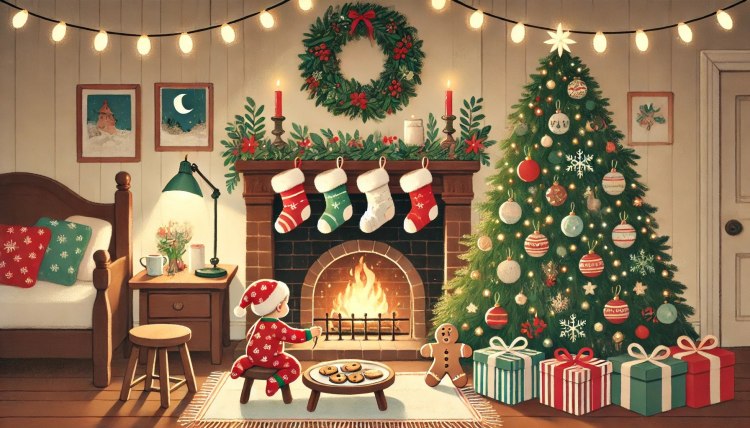
The story goes like this: a poor man had three daughters but no dowries for their marriages. Hearing of their struggles, St. Nicholas secretly dropped bags of gold down their chimney. The gold fell into the stockings hanging by the fire to dry.
Whether literal or legend, the tale became the basis for hanging stockings in hopes of receiving small surprises.
The Mystery of Christmas Lights
Today, lights are everywhere—wrapped around trees, glowing on rooftops, and decorating entire neighborhoods. But the first “Christmas lights” weren’t electric at all. People used candles clipped to branches, which, unsurprisingly, caused… a lot of fires.
Electric Christmas lights debuted in 1882 thanks to Edward H. Johnson, an associate of Thomas Edison. He hand-wired 80 red, blue, and white bulbs and displayed them on his tree—the first recorded electric Christmas tree lights.
What began as a tech experiment soon turned into a festive must-have.
Why Do We Put Ornaments on Christmas Trees?
Ornaments have been hung on trees for centuries, but they didn’t start out as shiny glass baubles. In medieval Germany, people decorated evergreen trees with:
- Fruit (especially apples)
- Nuts
- Breads shaped into stars or angels
These decorations symbolized abundance and hope during winter. Glass ornaments originated in the town of Lauscha, Germany, in the 1800s. Artisans blew glass into fruit shapes, stars, and figurines—traditions that still influence modern ornament designs.
Why We Leave Cookies for Santa
The custom of leaving treats for Santa has roots in multiple cultures. Norse children left food for Odin’s eight-legged horse, hoping for good fortune. Later, during the Great Depression in the 1930s, American parents encouraged children to leave cookies for Santa as a way to teach generosity even during hard times.
It caught on and became a beloved holiday ritual.
The Mystery of the Yule Log
Before the chocolate dessert version existed, the Yule log was an actual log burned during winter solstice celebrations. Families would choose a massive piece of wood and burn it for days to bring good luck.
The ashes were believed to protect the home from misfortune. Over time, as fireplaces got smaller, the wooden log became symbolic—and eventually turned into the delicious rolled cake we know today.
Why We Kiss Under the Mistletoe
Mistletoe has ancient ties to fertility, peace, and protection. In Norse mythology, it symbolized love due to the story of Baldur’s resurrection. By the 1700s, English households began using it as a romantic holiday decoration, and the tradition of kissing underneath it took hold.
The berries represented luck—originally, one was plucked for each kiss.
The Strange Evolution of Holiday Gift Wrapping
Gift wrapping wasn’t always a holiday essential. In many cultures, presents were simply handed over as-is. That changed in the early 1900s when an American stationery store sold out of tissue paper and began selling decorative French envelope liners as an alternative.
Customers loved the colorful paper, and wrapping quickly became a Christmas staple.
A Holiday Full of Strange Origins
From candy canes to stockings, many Christmas traditions have histories far stranger—or much newer—than most people realize. Whether shaped by practicality, folklore, or clever marketing, these customs continue to bring charm and magic to the holiday season.
If you’re curious about more quirky holiday origins, there’s a whole world of festive mysteries waiting to be uncovered.
🎄 Find more Christmas quizzes, games, and holiday magic right here!